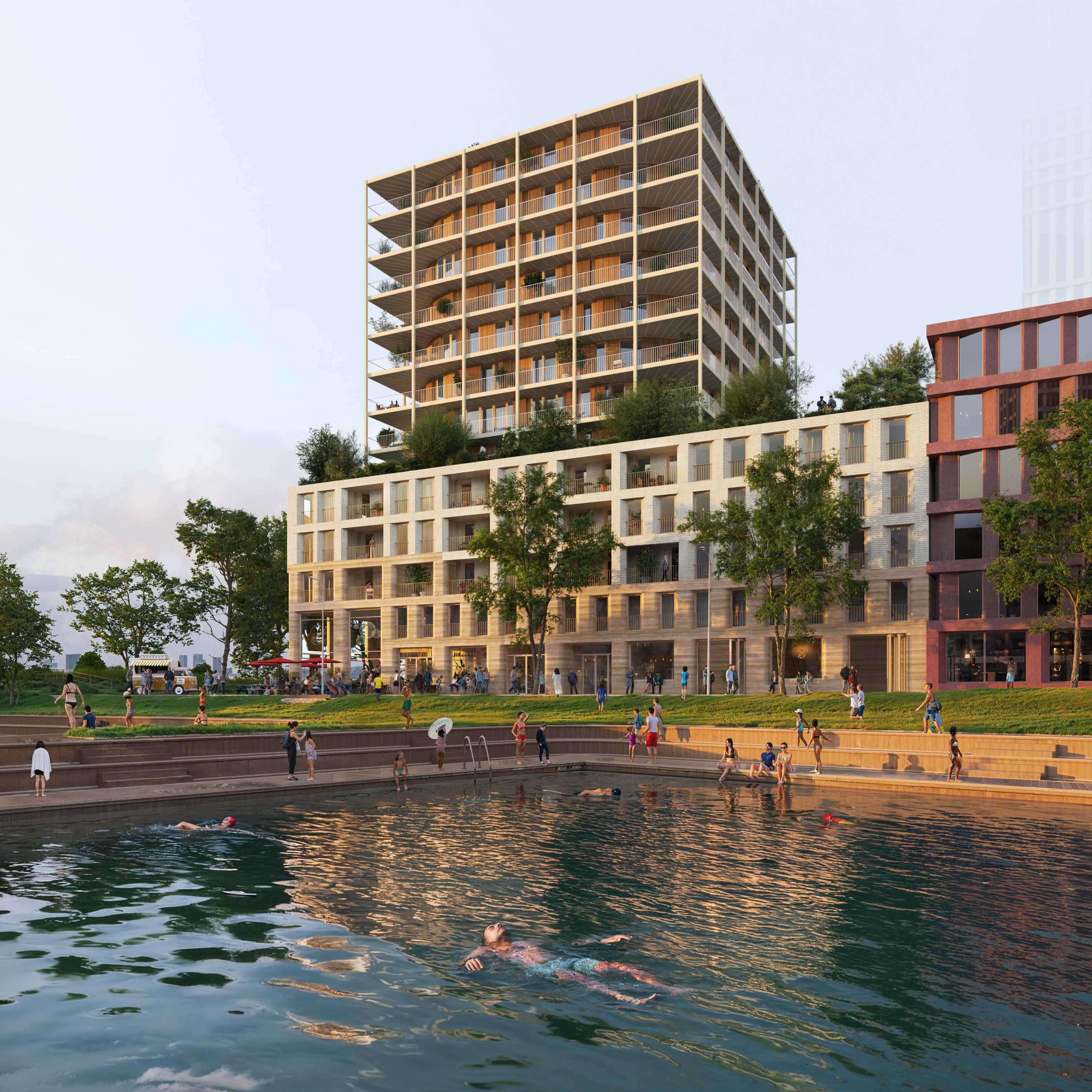
Radius rises in Amsterdam’s Sluisbuurt as a biobased landmark, drawing inspiration from the layered sediments of the historic Oergeul to shape its rammed earth plinth and expressive architectural identity. Above this grounded base, a slender timber tower emerges, combining flexibility, low environmental impact, and a sculptural presence that both complements and redefines the urban skyline.
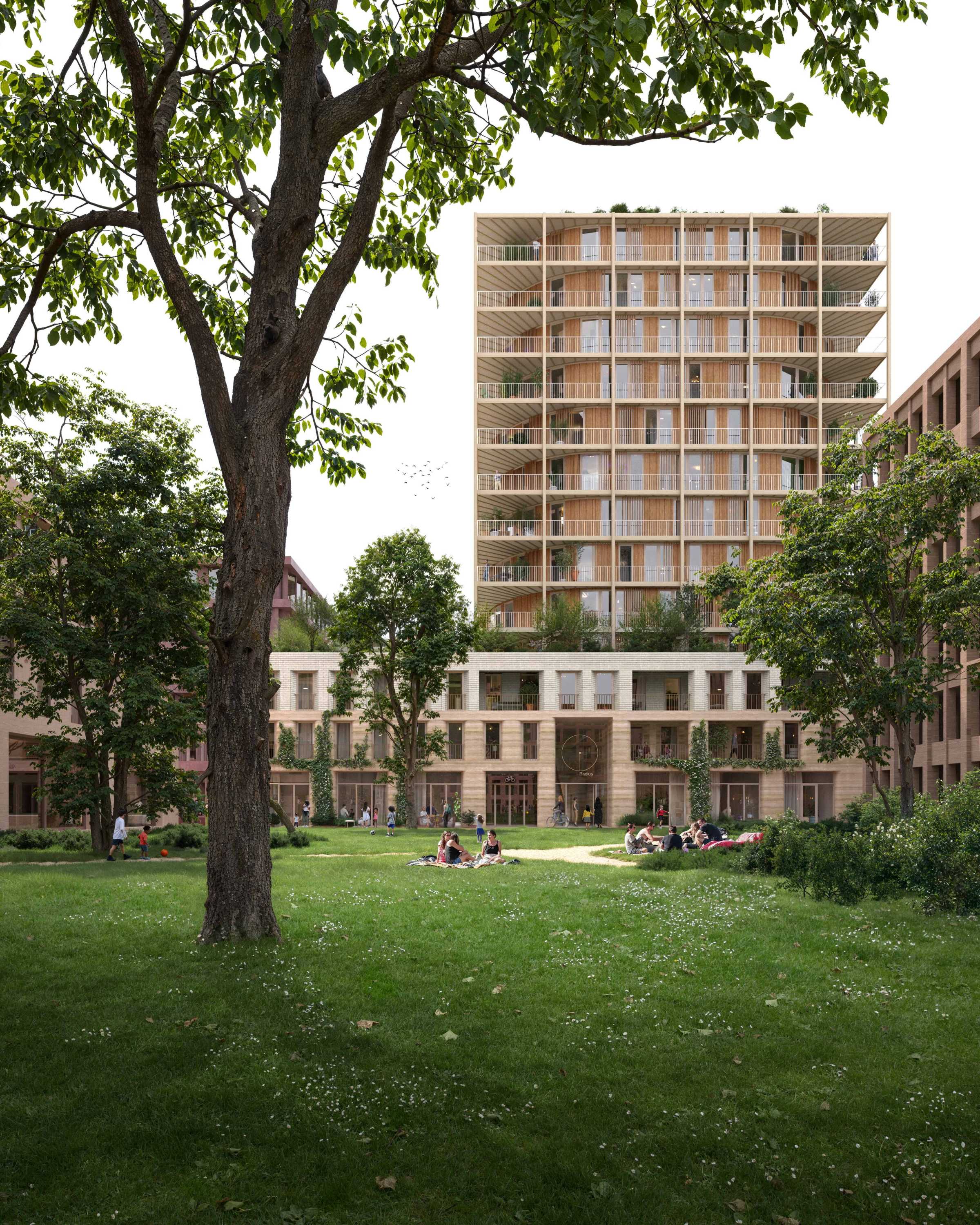
Radius is rooted in the geology of place, drawing inspiration from the Oergeul beneath Amsterdam, whose layered sediments once formed the foundations of the city’s dikes, quay walls, and roads. This natural stratification of alternating clay and sand is reinterpreted in the rammed earth plinth, giving the building a tactile, grounded expression. Echoing this condition, a layered composition emerges above ground in the Sluisbuurt: a robust, earth-toned base supporting a slender timber tower that both aligns with and subtly challenges the existing skyline.
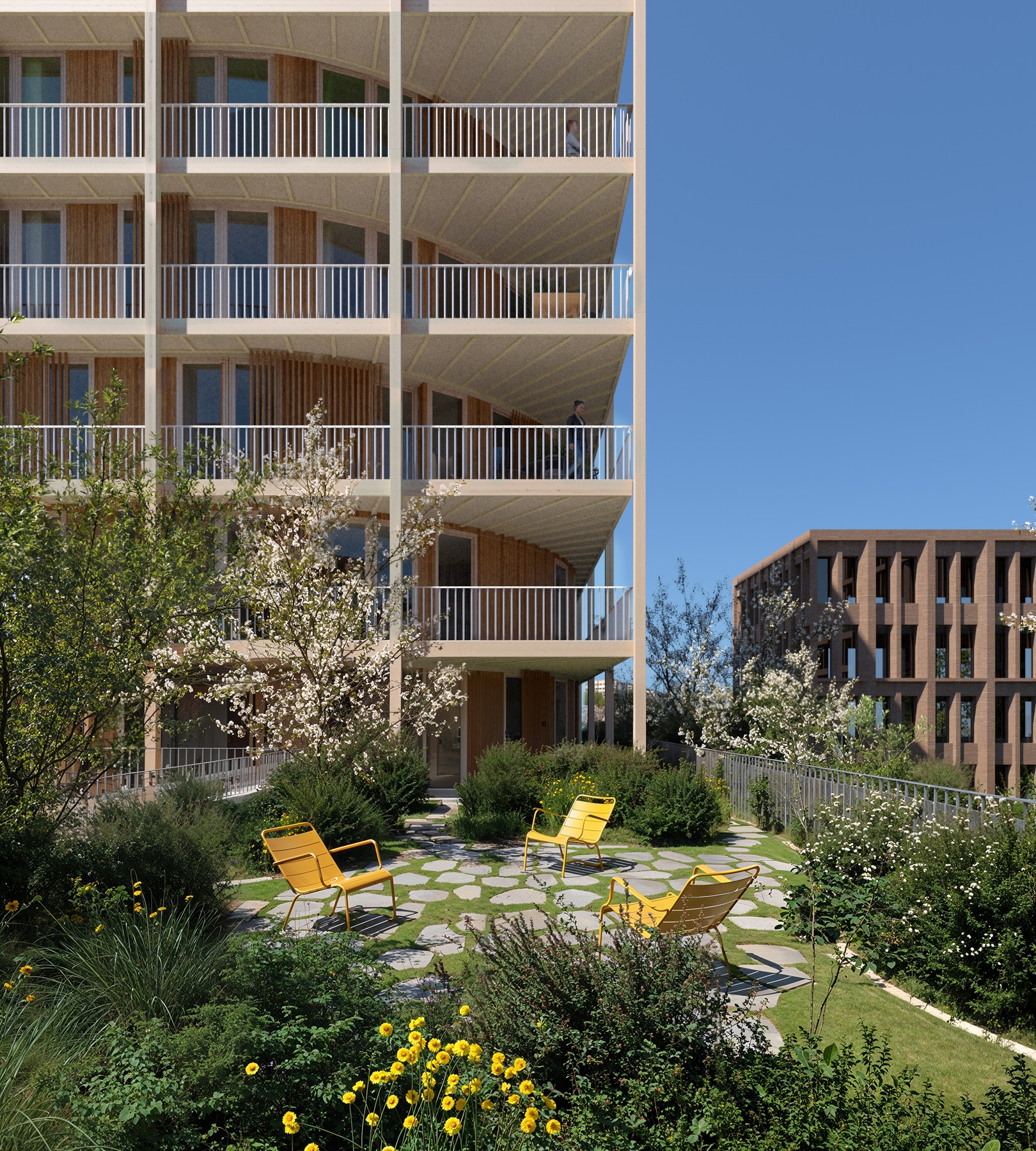
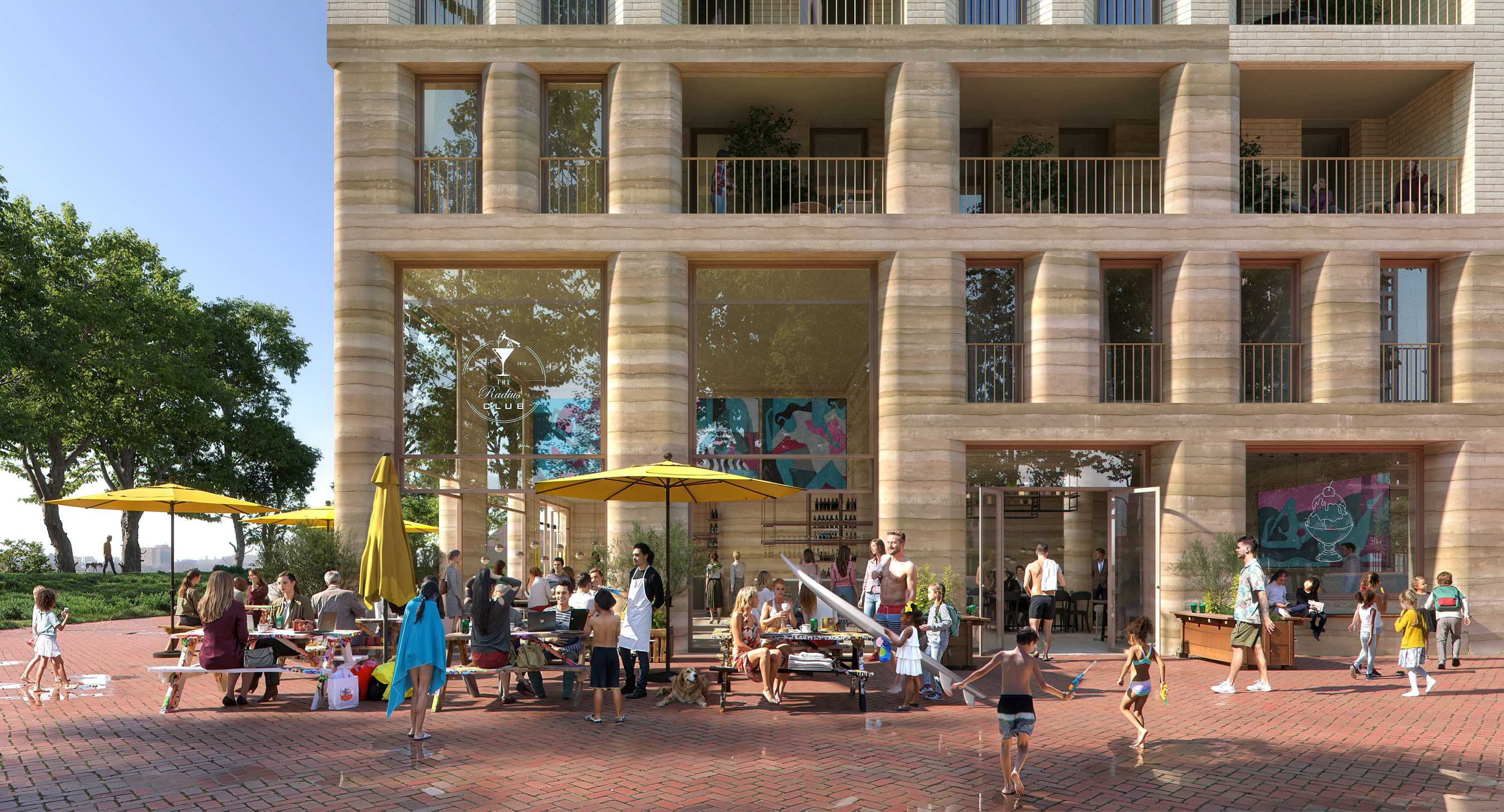
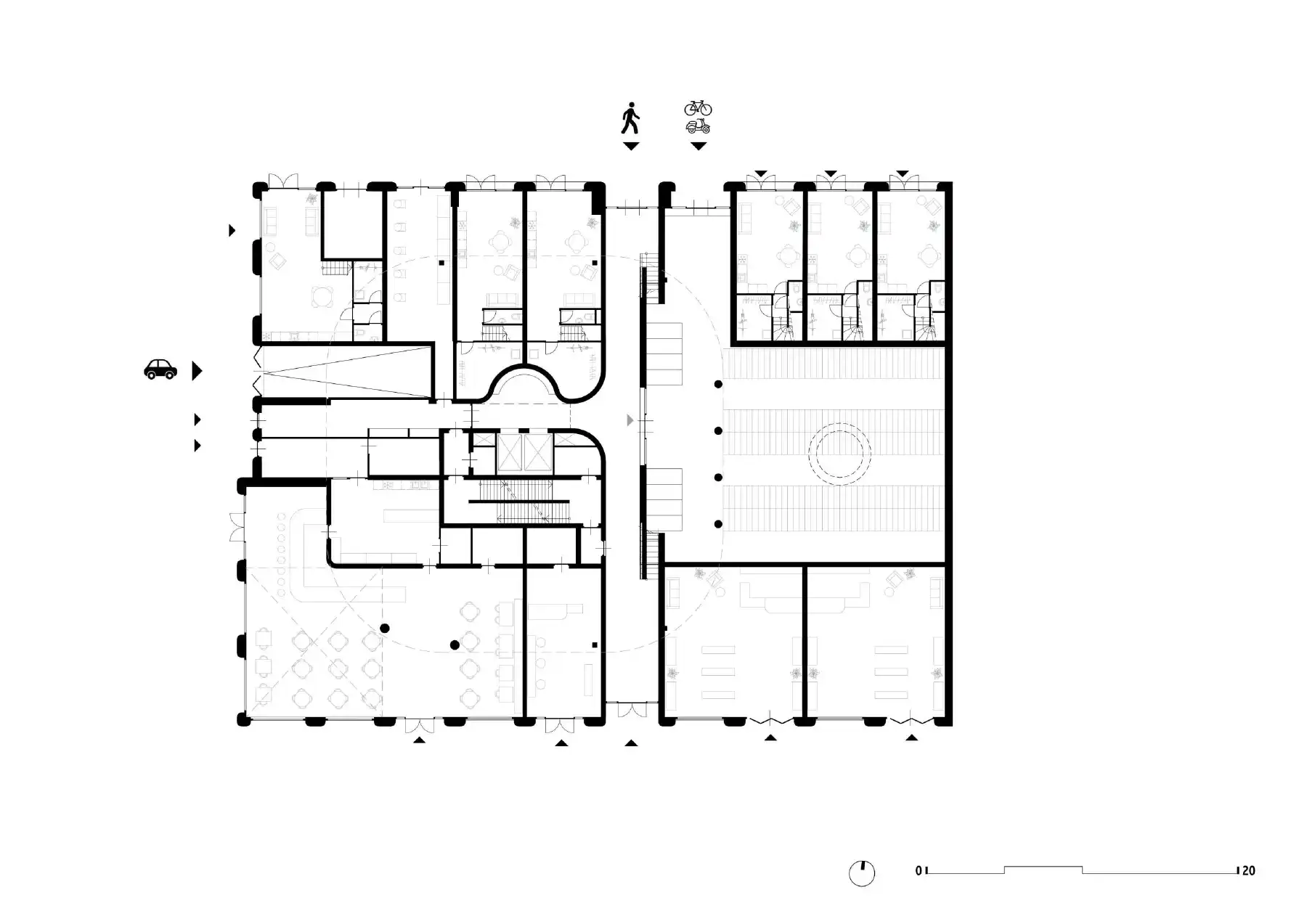
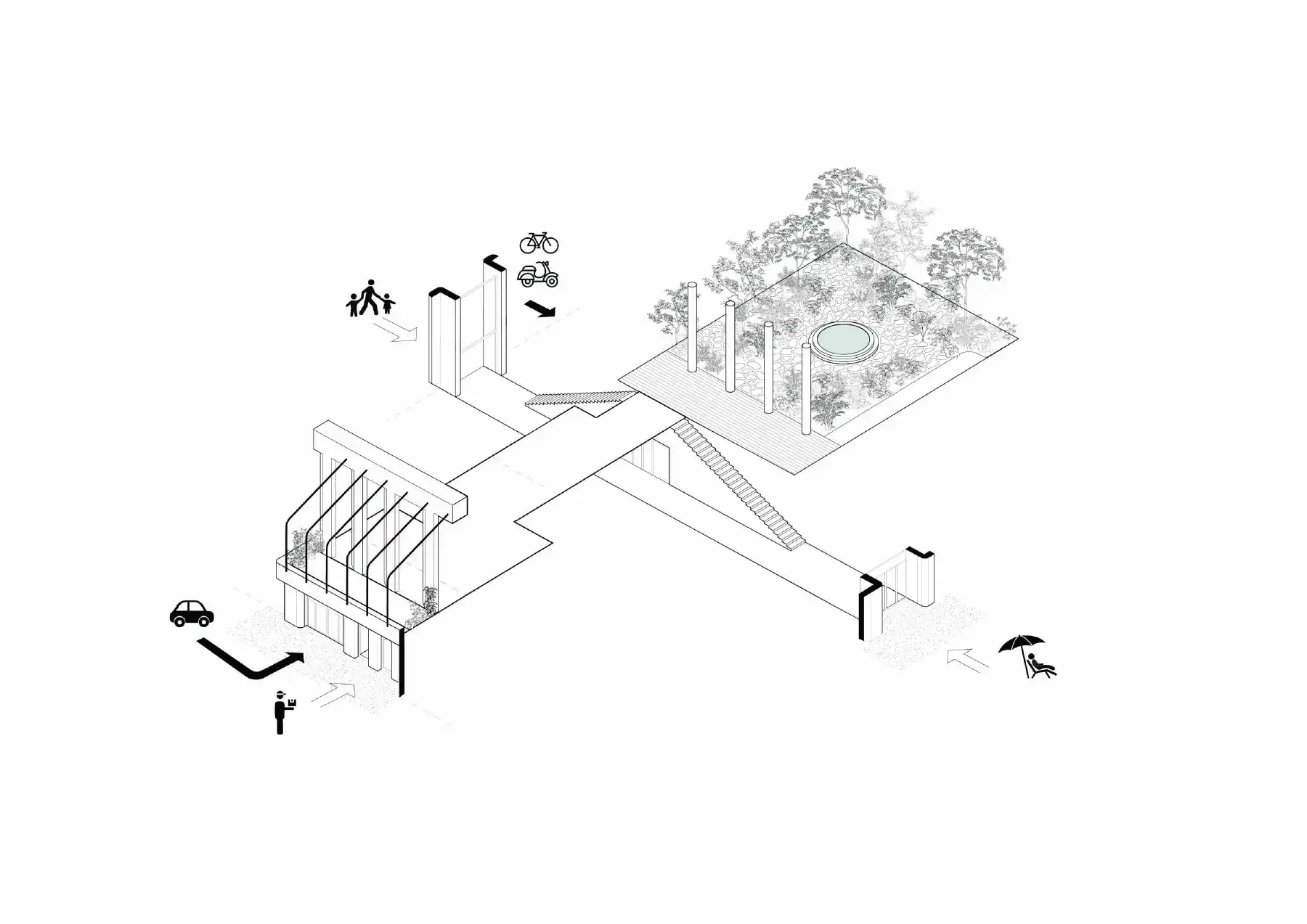
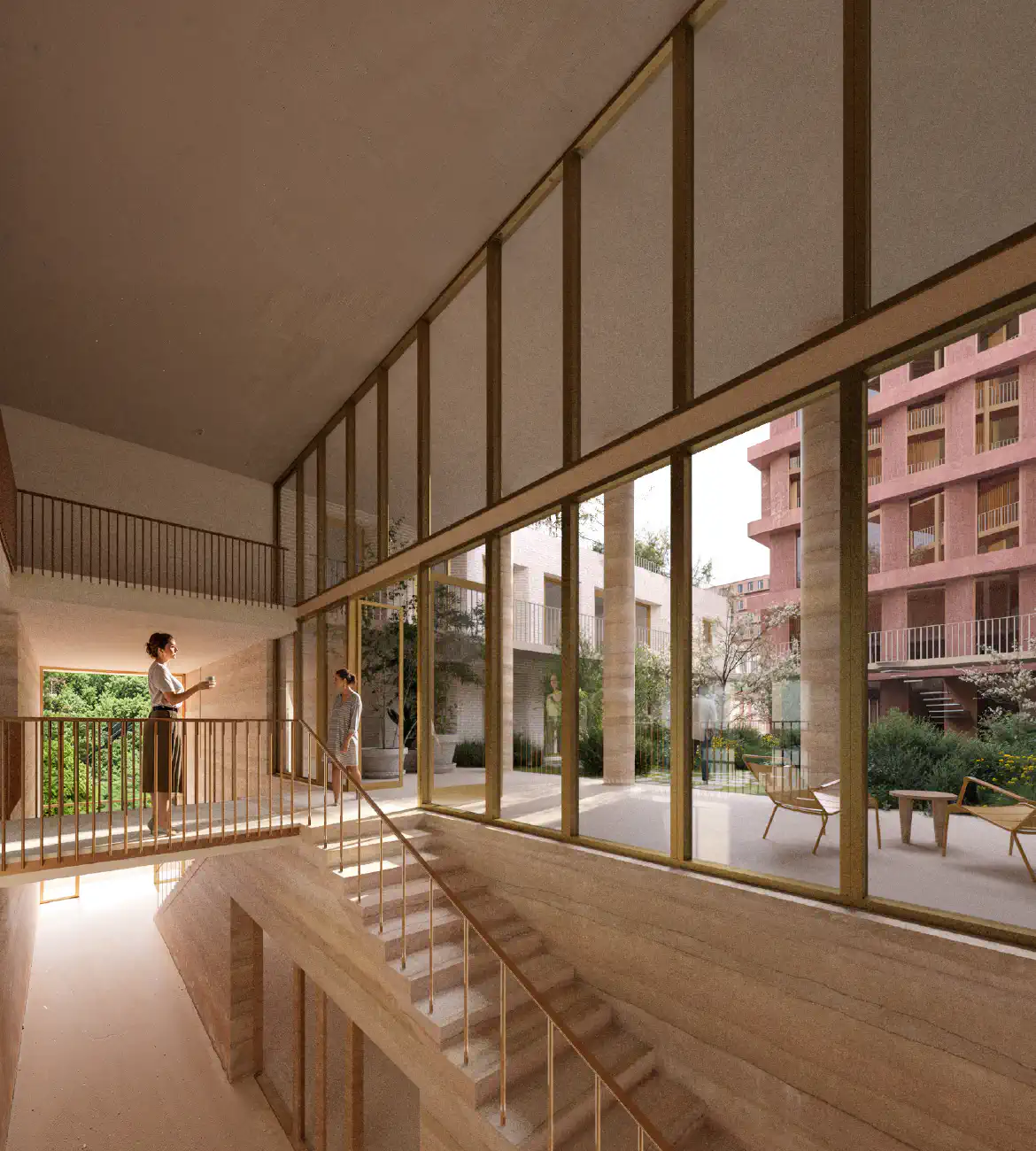
The plinth forms a solid, crafted podium of rammed earth and clay brick, into which a sheltered courtyard garden is carved—an intimate, green space for gathering and retreat. Communal terraces, including a west-facing platform overlooking the Amsterdam-Rhine Canal, strengthen the building’s identity and connection to its surroundings. The stepped western façade, shaped in earth materials, integrates a semi-covered collective roof terrace, while the southern façade establishes a more urban, robust edge along the Waterplein.
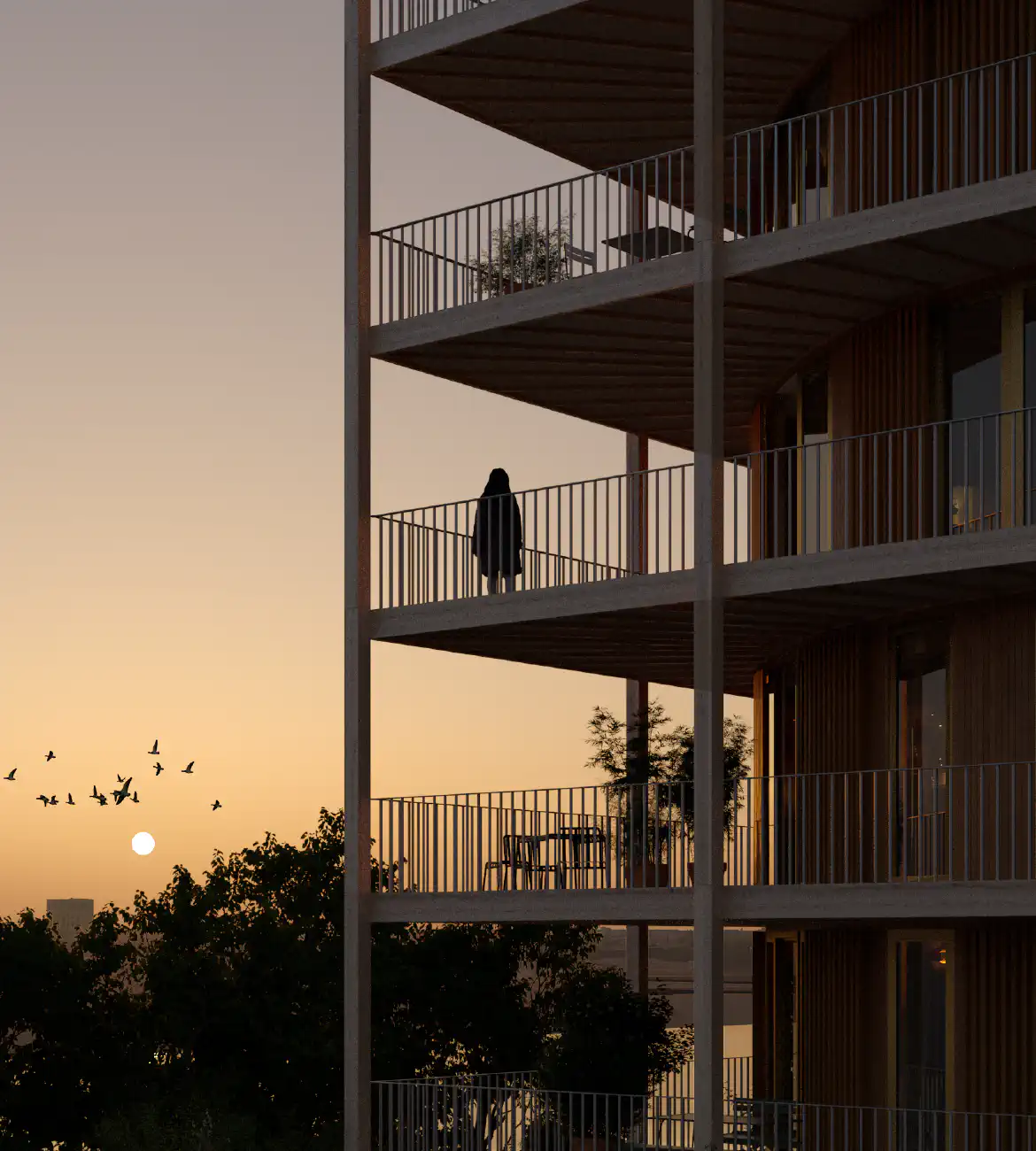
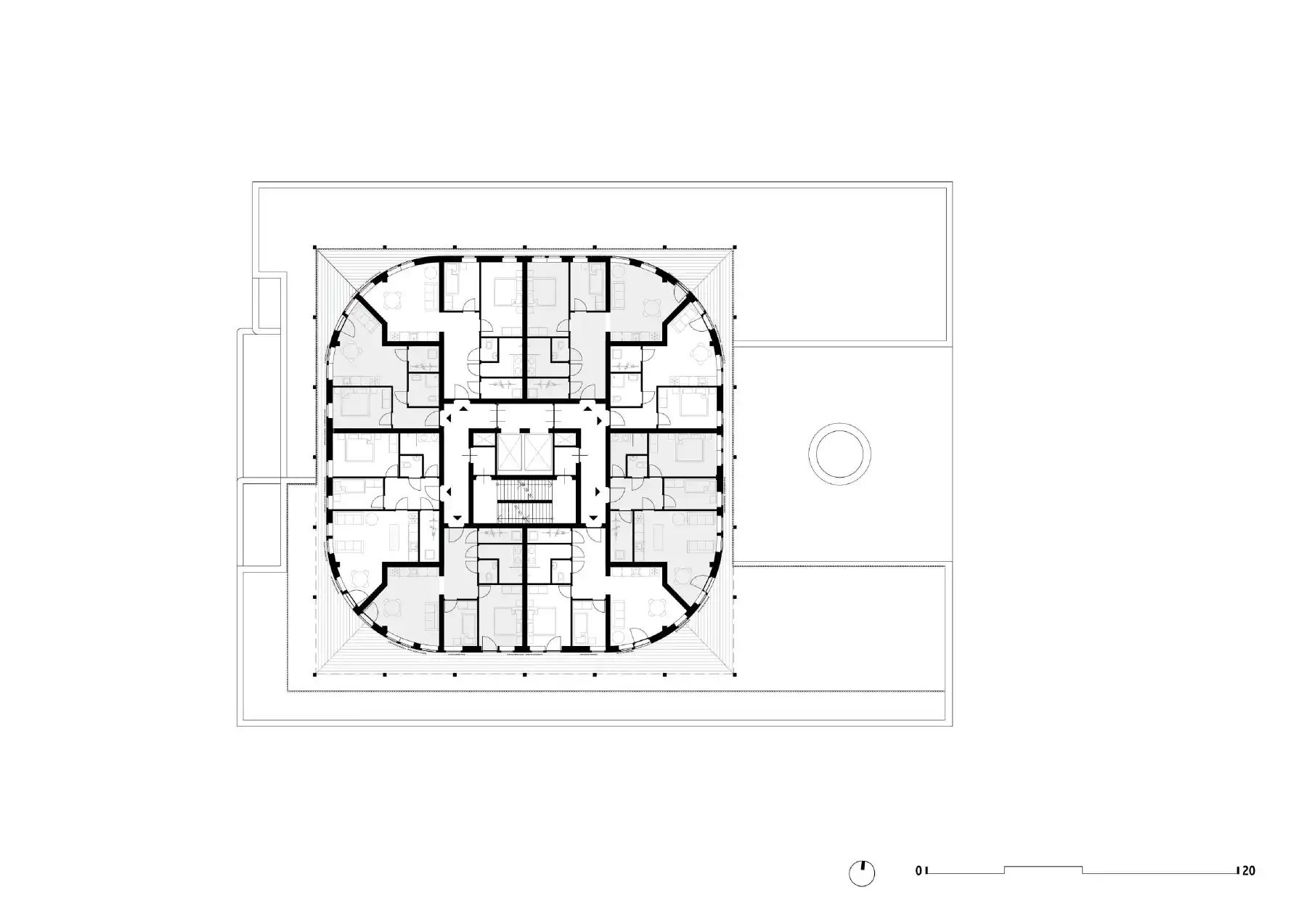
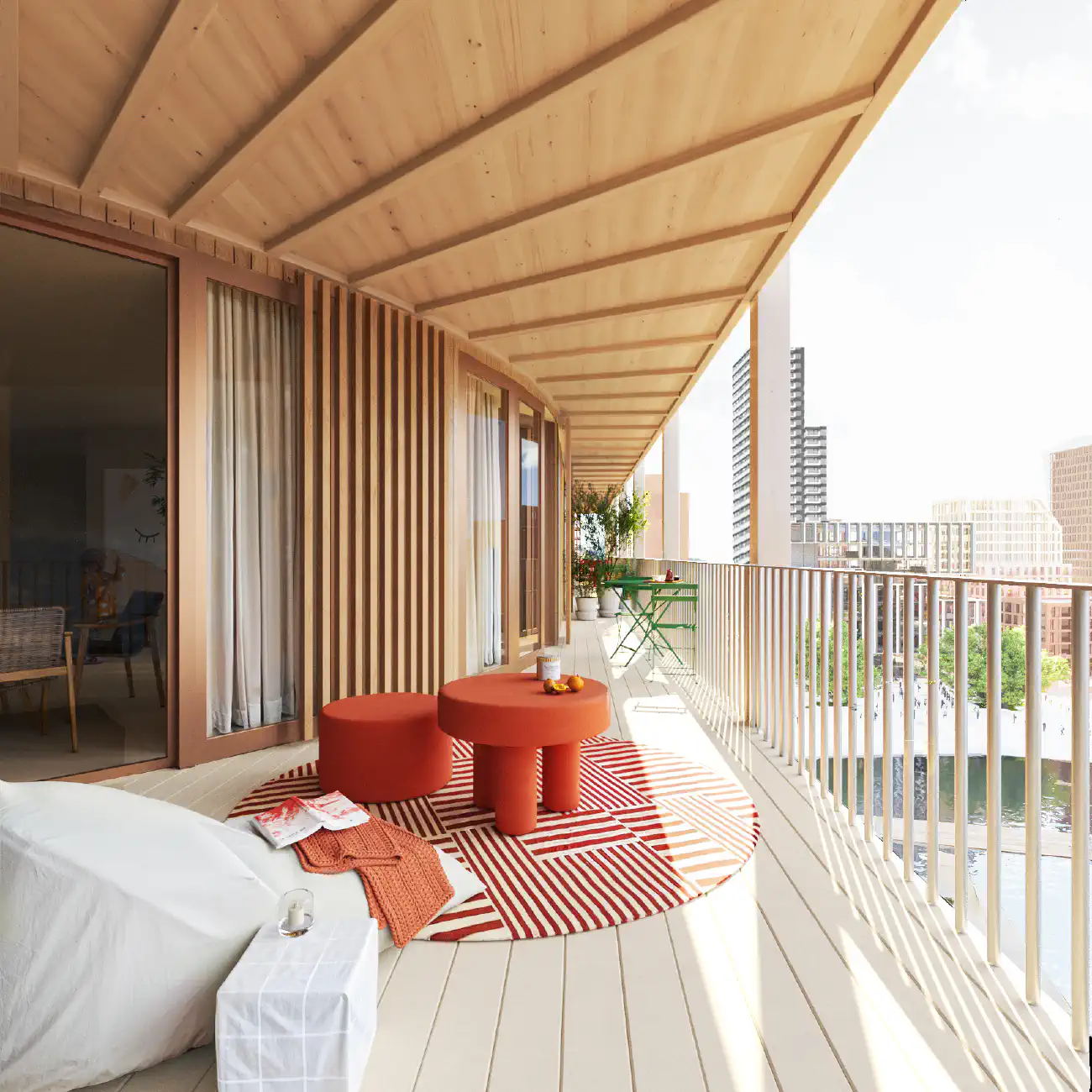
Rising from this base, the compact, almost cylindrical tower is defined by flexibility and clarity. Its column-beam timber structure allows for adaptable floor plans with varying apartment configurations, all benefiting from generous light, views, and outdoor space. A uniform yet subtly articulated façade emphasizes the tower’s sculptural form, while a secondary skin of balconies provides outdoor rooms, solar protection, and uninterrupted views. Constructed largely in timber—including CLT cores—the building achieves a significantly reduced carbon footprint and is designed for disassembly and long-term adaptability.
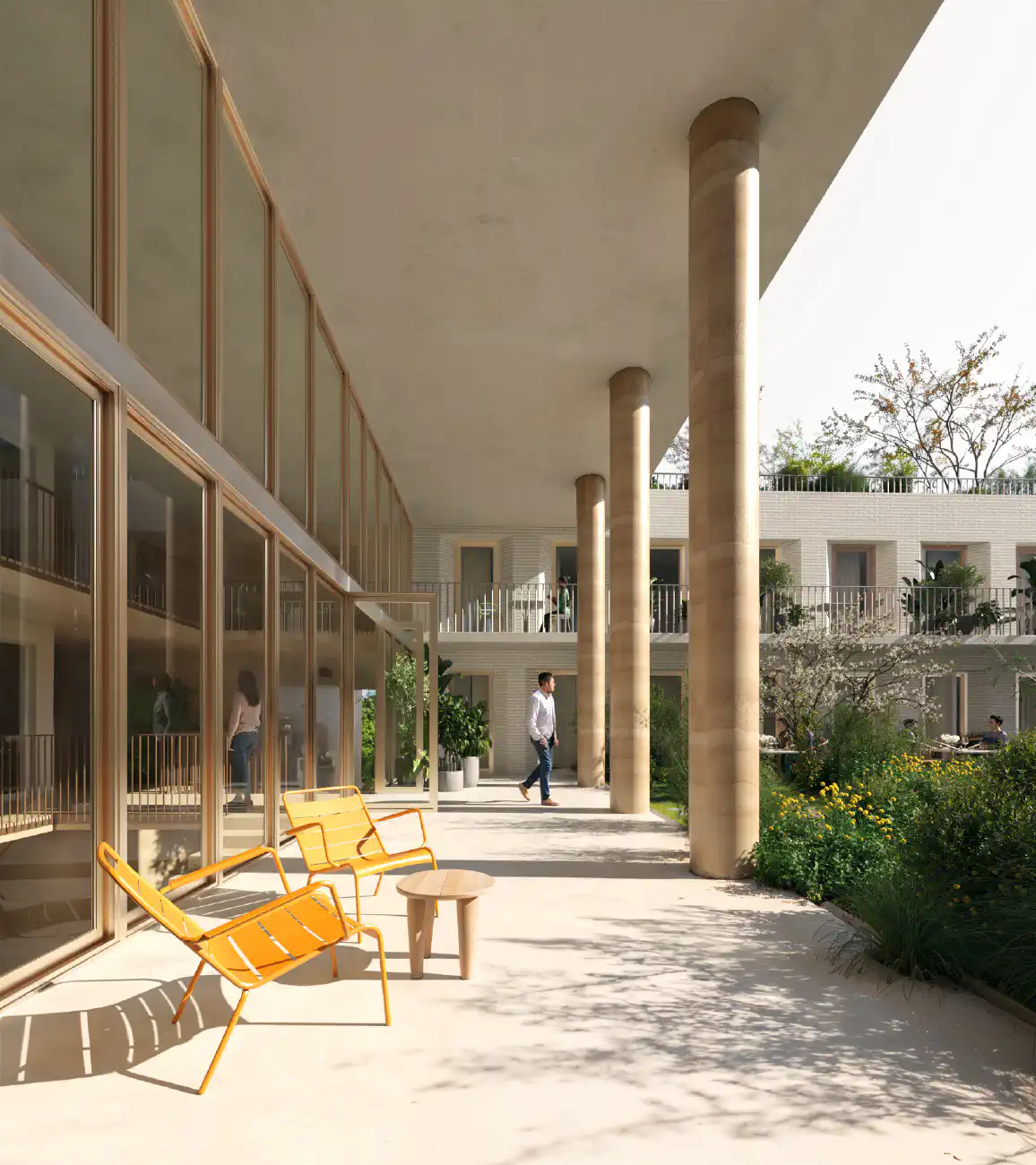
At ground level, public and collective life is carefully woven into the architecture. A neighbourhood café anchors the southwest corner, extending the public realm into the building through generous, sculptural openings. Inside, a sequence of double-height spaces, colonnades, and communal routes—infused with filtered daylight—creates a rich spatial experience ranging from intimate to open. Roof gardens and planted edges connect to the surrounding landscape, reinforcing the project’s nature-inclusive approach, while the materiality of the plinth contributes to thermal comfort, acoustic quality, and a strong architectural presence.